Let’s Revive Museum Art Rental/Sales Galleries

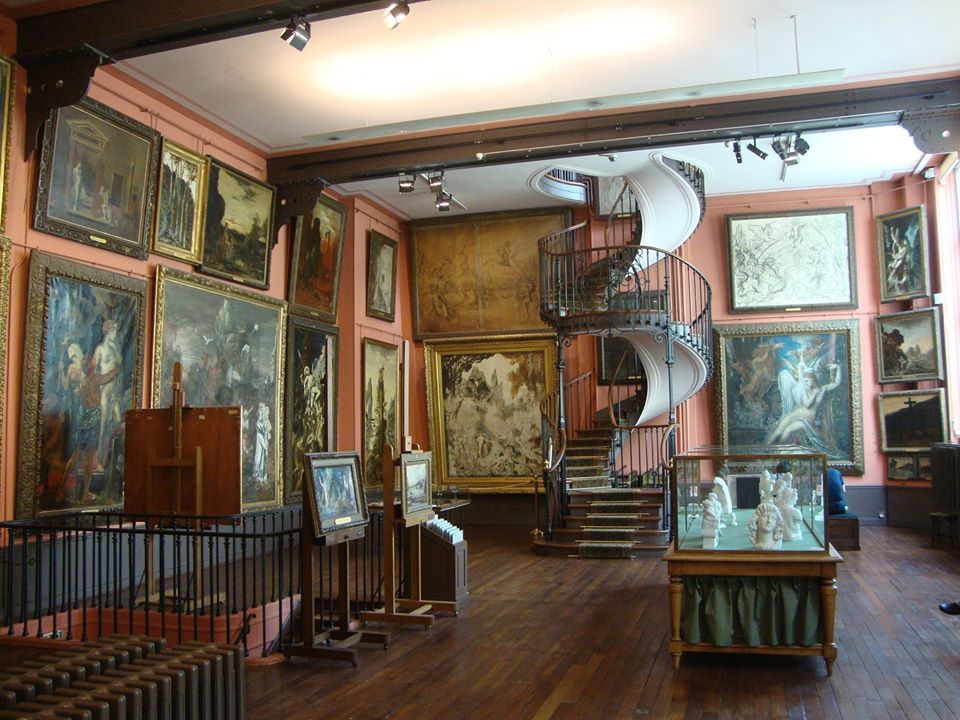
For those of you who aren’t familiar with an art rental and sales gallery, here’s a bit of background based on my personal experience. In the mid to late 20th Century, many major museums had art rental and sales galleries. They are exactly what they sound like. They were a dedicated gallery space where visitors could rent or purchase contemporary art. If I remember correctly, work could be rented by the month and monthly fees would be subtracted from the purchase price if the work was purchased. The artists on display were usually from the area around the art museum. These galleries would have a curator and a small staff…plus a group of volunteers.

How did this work? Well there would be a call for submissions from local artists. Similar to what regional or national shows do now. Often those eligible to submit had to live within the market area of the museum (the Art Institute of Chicago for instance used a 100 mile radius from Chicago). The artists generally could submit two or three pieces. This would usually happen quarterly. And just like any other art show, the curator or a guest artist/curator would select work to be exhibited during the next time period. And the artists who weren’t selected would collect their work and wait until another time.

After the selections were made and the work hung, there would often be an opening. But during the period work would often be swapped out or rehung depending on wall space and sales and rentals. And some galleries would have featured artists who would have a special niche or wall and additional pieces shown during the period.

These galleries were very popular with young artists. They provided a cheap and easy way to get work prominently displayed in a museum. But they probably didn’t provide enough revenue for the museum to cover the expenses to run the gallery. The Milwaukee Art Museum’s rental and sales gallery was in the Cudahy Gallery I believe and the Art Institute’s was in the lower level just north of their current photo galleries.

But these galleries started to disappear late in the century. I imagine there were better uses of the space calling out to the museums and as I said, they probably didn’t provide much revenue. I don’t know how much work was sold…nor if anything was ever rented. I didn’t know any artists who had any success that way. I was lucky enough to have work in the Art Institute art rental and sales gallery from fall of 1976 to spring of 1978…a number of prints and water colors. I never rented or sold anything but I did get a north of the loop gallery out of it.

But let’s look at 2020 as we watch the nation search for ways to reach racial and gender equality in society. And we watch art museums and art groups pledge to provide more diversity in their staff and management, the artists they show, and the programming that they provide. Let’s consider reaching out to the local community by reviving museum based art rental and sales galleries.

Yes, we still have the issue of revenue/cost relationships. And even as museums start to re-open they have all been hit hard financially by the shutdowns forced on them by the COVID-19 pandemic. But in a lot of ways, modern technology should be a major means of reducing costs compared to the good old days.

Yes, the museum will still need to provide floor space and in most museums that will still be a limited resource prized by the curators of traditional art classifications. But the museums have committed to community diversity and they have a very visual opportunity here. Now, they will still need a curator. Whether that individual is solely dedicated to the art rental and sales area may depend on the size of the museum or its audience. And they will need staff beyond the typical museum security staff because, hopefully, some sales or rental transactions will be taking place.

But in the 21st C, museums are more in tune with securing corporate sponsorship for galleries, shows, and special events. This would be a perfect instance for a local sponsor to reach out to the local community as well.

The museum wouldn’t have the sturm and drang of artists hauling in pieces for jury four times a year either. Most shows and galleries now use digital work submitted by email or other digital means. So periodical calls for submissions won’t require extra staff, storage space, or gallery interruptions. So a curator and/or invited jury could review prospective pieces and more easily put together a show.

But given a new interest in outreach, the curator could also actually curate…rather than perform a blind jury…and pull together shows of local artists that would provide a real opportunity to exhibit artists from diverse backgrounds. Not only diverse artists but primarily local artists…who would enjoy the exposure and imprimatur of showing in a museum.

This may sound grand but there are a couple of issues that I am aware of…and readers can probably come up with a dozen more.

First, the museums would need to develop the expertise to seek out and identify minority artists in their communities. That isn’t as easy as it seems. Museums tend to be white and often older and in the past 20 years, there have been fewer and fewer local galleries so local artists are harder than ever to find. (why the call for submissions and a jury process are still viable…although it may be necessary to find new venues to get the message out…hurray for social media(?))

And the second is museums are getting very expensive to visit. And yes, some museums have free days subsidized by local corporations or philanthropists, but in general museums are very expensive to visit. So to be particularly effective, art rental and sales galleries should be available to the public in an area outside the paid admission areas. Like the bookstores at the Art Institute or the Milwaukee Art Museum. Or free admission vouchers should be provided to exhibiting artists or area organizations who support minority communities or societal diversity.

It is one thing to embrace diversity through hiring and exhibitions…but at some point you have to provide a means to embrace the whole community as well.

Ok, I haven’t actually solved anything here…just made some suggestions off the top of my head…but I’d like to see major museums again invite local artists back into the house…all local artists…and then provide means for the whole community to celebrate those artists.
American Players Theatre’s Back to the Woods Campaign

One of my biggest disappointments for the summer of 2020 was the cancellation of American Players Theatre’s summer season. This theater has meant a lot to me over the past 18 years or so. I had wanted to attend their theater for years but there were always things that got in the way. But while going through a divorce, I made the time to go. Some very important alone time that let me restructure my life and rediscover the arts that lived in my heart and my soul. At first I attended every Shakespeare play that they were presenting, usually one per month in June, July, and August. I made friends with a couple who ran a Spring Green motel and they always put me in the same room on every visit. But they moved on and I had to find other digs. sigh.

And then I met the love of my life and I was so eager to share my experiences at American Players Theatre with her. And she loves it as much as I…and we expanded our interests in plays and playwrights and also embraced the Touchstone Theater as it came into its own. And we visited my cousin who had a shop in Spring Green…and found favorite restaurants…and cherished our evenings (and matinees…something unusual for us) spent at APT. Magic memorable times. What an exciting period for both of us.

Over the past five years, we have changed our habits and attended a number of plays over a number of contiguous days around my birthday in mid-August. And this was the plan for 2020…and celebrate a milestone birthday as well. So this summer has given me a real sense of loss in any number of ways. But I will endure and look forward to the future of American Players Theatre. And that’s where we are today…let’s insure the future of APT. Read the email below…watch the video from Brenda DeVita…and please donate something! I will be giving them $70 to celebrate my 70th birthday and I intend to have drink at APT in 2021 on my next one!

Last week we celebrated Founders’ Day – the anniversary of APT’s first performance, which took place on July 18, 1980. Since that day more than 40 years ago, APT’s season has been in full swing at this point in the summer. Until now.  As soon as we announced the cancellation of our season, we began diligently planning and analyzing how APT is going to come out the other side of this. Here is our plan.

Today, we announce Back to the Woods: A Campaign for American Players Theatre. The campaign will raise the funds APT needs to literally get back to the woods and produce a full season in 2021. In the meantime, it keeps basic operations running and allows us to create a bit more virtual theater along the way (more news on that in the coming weeks and months). The goal is to raise $5 million by the end of 2021. Thanks to the generosity of thousands of you, we are already close to the halfway mark, with a total of $2,290,000 in hand already.

Once again, we ask for your help. And this time, we’d like to take it a step further. We want you to be our partner in reaching an even larger community of people who care about APT’s future.

Please visit our campaign site. There, you’ll find stories from people who love and believe in our theater and the work we do. Stories from people whose lives have been changed by APT. Each of them has volunteered to become a fundraiser. We hope their experiences inspire you to support their effort.

And we invite you to go a step further; to join them and become a fundraiser yourself for APT’s Back to the Woods Campaign. Tell your story. Then share it with friends, and help us get the word out to people who care but may not have given yet. Whether you join a team or fundraise on your own, starting a page is fun and easy, and any amount raised will go a long way in helping us reach our goal.

Above all, we treasure the relationship we have with our supporters, and our audience. We want to strengthen that relationship even further, as we fight for the future of our theater, together. And as always, we hope you’re remaining happy and healthy, and that we’ll see you safe, sound, and as soon as possible.  

A Tale Of Two Cities: Notre Dame Cathedral and Hagia Sophia

In the past week or so there have been major announcements that will affect two of the world’s most famous and most popular tourist attractions. One announces the plans to rebuild Notre Dame in Paris and the second to re-convert the Hagia Sophia in Istanbul to a mosque.

First the good news about Notre Dame. After a devastating fire that nearly destroyed the cathedral in April of 2019, there were several discussions about restoring the building. Several suggestions include wild new components that would have significantly altered the buildings appearance and some that might have been welcome enhancements.

But French President Emmanuel Macron has declared that the cathedral will be rebuilt exactly as it was…well as of the 19th Century after the restoration completed by Viollet-le-Duc. That would include the spire that we are all familiar with that replaced the aging and deteriorated spire that Viollet-le-Duc replaced during his work on the cathedral.

This on the face of it is good news…but I am wondering what President Macron means by: “the “redesign” will look exactly the same as the original Gothic design.”

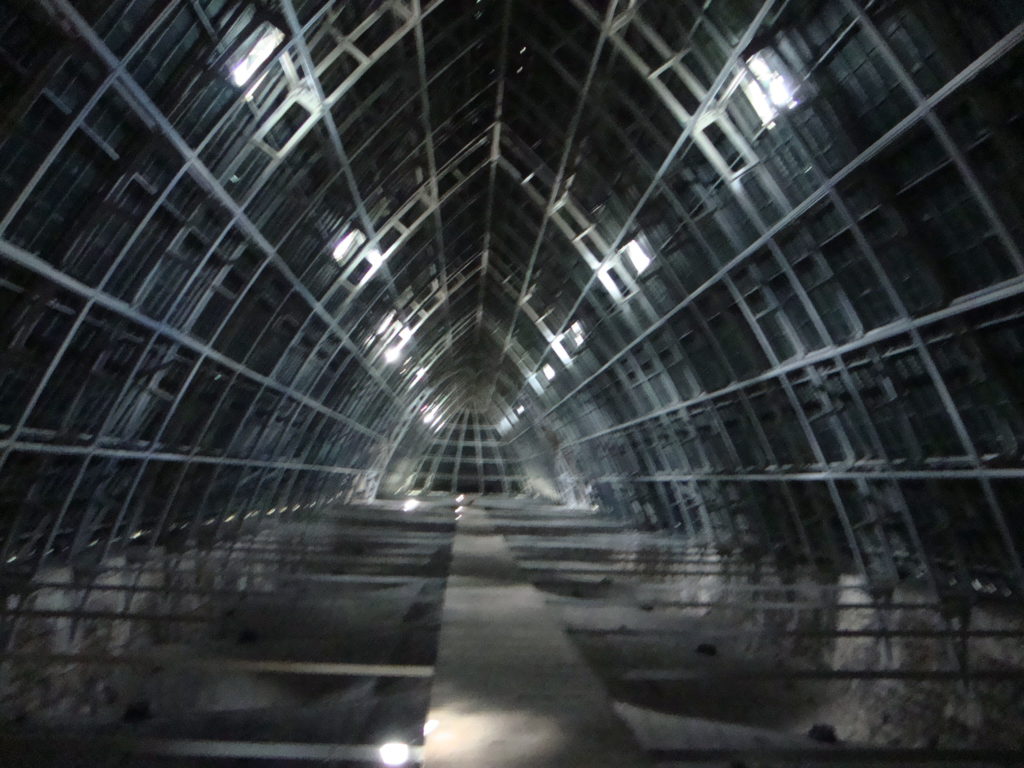
Will the roof be reconstructed of wood? Something that isn’t as readily available as it was in the 13th Century. There is no reason that the roof and upper portions can’t be re-created in modern materials to resemble the original materials. After all, the cathedral at Chartres which also suffered damage to its roof by fire and it was replaced with an iron roof without changing its appearance dramatically.

And I would hope that a substitute is found for the lead that was used extensively throughout the roof and spire. After the fire there was serious concern about the amount of lead that was distributed throughout the area by the fire and smoke itself as well as the efforts of the fire fighters. There certainly must be other materials that will serve without compromising the feel and look of Notre Dame.

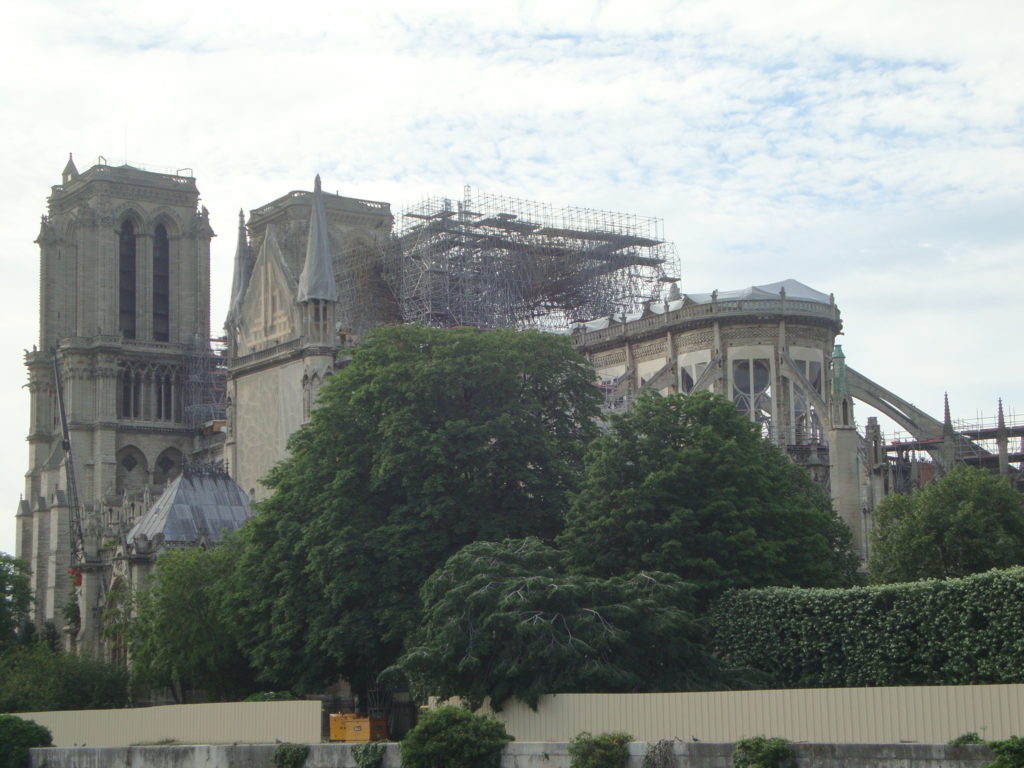
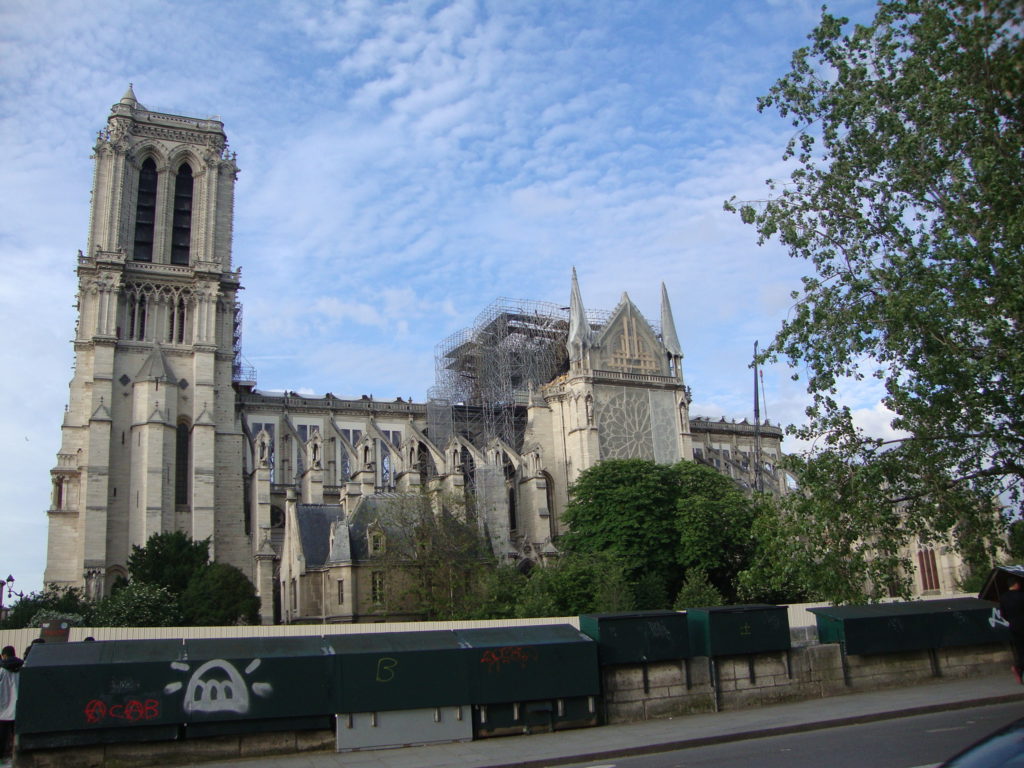
This fire took on a personal aspect as I was planning a vacation in Paris for May and June of 2019. I had climbed the tower in the past but in January during semester break but was looking forward to doing it again and seeing a lush and green Paris from this bird’s eye view. Instead I was greeted by this (some of the scaffolds in this photo were left from the work teams who may have started the fire):

© 2019 Ed Heinzelman

President Macron’s plan is to have the work completed in time for the 2024 Olympics that are being hosted by Paris. I look forward to visiting it shortly after that.

And now I am just showing off a bit: here is what the under roof and over cathedral space currently looks like at Chartres:

© 2019 Ed Heinzelman

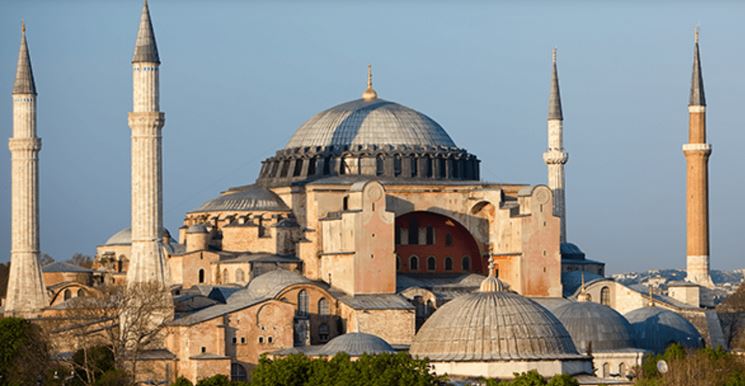
So let’s move on to Istanbul! The Hagia Sophia has a long history as a place of worship. Built originally as a Roman Catholic basilica by the Roman Emperor Justinian I as the centerpiece of Christendom in Constantinople, it later served the Eastern Orthodox Church, and finally became an Islamic Mosque when the city fell to the Ottoman Empire. But in 1934 it re-opened as a museum in the modern secular nation of Turkey.

Now, during its original conversion to a mosque a large number of the Christian mosaics were covered with plaster. Most followers of Islam do not believe that man should create images of living things. But during the conversion to a museum, the surviving mosaics were cleaned and restored and Hagia Sophia showed off the best artistic practices of the Christian and Islamic eras in the region.

But now in 2020, there has been a renewed movement toward nationalism in Turkey as in other nations, and after some controversial legal maneuvering, Turkey’s President, Recep Tayyip Erdoğan, has declared the Hagia Sophia will once again serve as a mosque. This decision has roiled the Catholic and Orthodox worlds as well as UNESCO which has named Hagia Sophia as a world heritage site. President Erdogan has assured the world that the site will be open to visitors from around the world but not during prayers.

Erdogan, who said the first Muslim prayers would begin in Hagia Sofia on July 24, has insisted the building will be open to all, including non-Muslims.

“We will preserve Hagia Sophia’s status as a cultural heritage the same as our ancestors did.”

“There is no obstacle from a religious perspective to Hagia Sophia Mosque being open to visitors outside prayer times,”

President Erdogan isn’t totally insensitive to the issues he is causing but:

“I want to stress that Hagia Sophia turned into a mosque from a museum, not from a church”

So, the site should be open most of the time…but I don’t know exactly what ‘outside’ of prayers will mean in the future. And this may be an example of cutting off one’s nose…as 3.8 million people visit Hagia Sophia each year. That has to be a sizable revenue source for Turkey and if this change discourages tourists….it may be a very expensive decision indeed.

But my biggest concern is the mosaics and other non-Islamic imagery that remains and that was restored when the old version of the mosque became a museum. Currently this is the plan:

Diyanet (Istanbul’s religious authority) said in a statement on Tuesday that the Christian icons in Hagia Sophia were “not an obstacle to the validity of the prayers”.

“The icons should be curtained off and unlit through appropriate means during prayer times,” it said.

That’s today. Last month we didn’t anticipate this renowned museum becoming a mosque. Will the icons and mosaics at some point become a liability and religious leaders or worshipers demand their removal or worse yet destruction? I am not feeling comfortable with this change in status for Hagia Sophia. We’ll just have to wait and see.

Hagia Sophia via UNESCO