Milwaukee’s newest dance company exploded across the city skyline this past Saturday night with their presentation of Lia Smith-Redmann’s original choreography, The Firekeeper. This is the most moving and touching dance program that I can ever remember seeing. Sadly, it will have only one more performance in the near future on October 25, 2026 in the Door County Auditorium in Fish Creek, Wisconsin. If you are in the area, try to catch it. You will be moved.
The Firekeeper is the stuff of legends. It is a story of an ancient people, the Kurents, who are suffering under an oppresive leader, until the King of the Kurents reappears and gives them hope and a path to a new world. In the second act, a hero emerges from among the Kurenti, and learns the magic of conjuring fire, which brings our hero to full self-realization. And in the final act she returns to her community and leads them from their hopeless situation into an old but now re-imagined world.
From the company’s website:
Inspired by tales such as Rumplestilskin, Little Match Girl, The Giver, and Rite of Spring, this contemporary story ballet depicts a chilling world of dystopian technological cruelty, and the spirits of rebellion that come from unlikely places. Featuring characters from Slavic Carnival traditions and inspirations from the likes of Akram Khan and Pina Bausch…
The cast of The Firekeeper. Courtesy of Smith-Redmann Dance Co.
Smith-Redmann has choreographed this elaborate story for nine dancers and the cast for this series consists of dancers from here in the Milwaukee area. Our dancers are: Delilah Cardiff, Beck Kimbro, Paloma Kong-Ndoumbe, Elise Leonard, Madison Lower, Jessie MacDonald, Abigail Pasmore, Amaya Yasmin Esteves, and Rae Zimmerli. Full Disclosure: I am a personal friend of Elise Leonard, and I am grateful to her for getting me in touch with Lia Smith-Redmann and alerting me to this performance.
Smith-Redmann likes to go big and not just with the story. The dance itself is expansive as all of the dancers at one point or another are reaching out into space just as far as they can and maybe then some. And many of them reach up into the sky and occupy as much space as is physically possible. This is very compelling choreography that pulls you into the story and the action. And the action is very fast and expressive more often than not which brings a certain urgency to the action and kept me riveted to the stage. Which can be a problem because Smith-Redmann has choreographed these vibrant and active movements for every single dancer on stage, so when all nine are on stage as is often the case, you don’t know where to focus. Even in the piece leading into the finale, the ensemble was strewn about, laying on the floor, but here too, they expressed their volume and presence in the story.
The stage here is the wooden floor of the sanctuary of Calvary Presbyterian Church. So you are right on top of the dancers in a comfortable folding chair, so you can see and feel the emotions and actions very clearly. And there is not a toe shoe in sight, the dancers are all barefoot. So the slap of a barefoot on wooden floor adds to the sensory feel as well as the occasional squeak when a dancer makes a sudden spin or change of direction. I don’t quite know why, but those sounds felt very very satisfying.
Editor’s note 10/19/2026: This was part of my original mental text at 3:30 AM Sunday morning, but it had slipped away by 3 PM in the afternoon as I wrote. It reappeared at 1 AM this morning and now I am going to write it out for you but it is merely a paraphrase of the grand language from the middle of the night…and this might not be in the appropriate spot in my text, but here goes! The Dances and the dancers are amazingly agile, nimble, and fluid. And joyous. Even in the sad or threatening bits, the dance is joyous. And in her opening remarks, Smith-Redmann warned us that some violence is depicted. And it is. But just like the violence in the folk tales mentioned above it is accepted and understood and never comes across as repellent.
But don’t think that there weren’t any grand lifts or spins or solos or pas de deux. There is plenty of western ballet influence but it is intertwined with any number of other dance traditions. Certainly Slovenian styles, some other European styles, and once or twice it seemed in transition that a dancer or two held a post similar to pictures I have seen of Asian Apsara dance figures. Which brings us to the music. The accompaniment was recorded and is a grand collection of different influences as well; from folk traditions, to western classical, to electronic music, to more modern idioms, to just drumming. At one point, although not technically, music, the dancers were sitting on the floor, moving their arms and upper bodies to the vocalized sounds of their own breathing. This wild diversity wouldn’t seem to make sense, but it worked and was wholly unified with the dance movements and the story elements throughout.
One more note on the dancers. They did just an amazing job. First, they had to learn and master about one hour’s worth of choreography, and as I said, most often unique to the character that they were playing. And the speed at which they moved was often very quick with a variety of stops, returns, and sharp turns. And some of the lifts and carries that they completed were a bit harrowing from my seat. The scariest move was when Elise Leonard tried to escape by running directly toward the audience full out and two other dancers grabbed her arms and slingshotted her back into the company. Not just their dance but their gymnastic talents are amazing.
I am not used to covering dance, so I am sure that I leaving something important out. But I can’t wait to see the next presentation from Smith-Redmann Dance Co.!
YES, I left something out. Lia Smith-Redmann also did the sound design and costumes. Early on the costumes were contemporary casual wear but as the story progressed the costumes depicted the different folklore characters that populated Smith-Redmann’s story. Just as beautiful and thought provoking as her choreography.
And the Presenting Supporters were Slovenian Arts Program and the Door County Auditorium.
There are two touchstone seasonal traditions in the fine arts world…in Milwaukee they are the Milwaukee Rep’s A Christmas Carol and the Milwaukee Ballet’s The Nutcracker. In both instances the Milwaukee presentations are based solidly on the legacy literature but personally molded and directed by the local artistic directors to great effect!
I don’t remember the last time that I saw The Nutcracker…certainly this century but maybe not during the Michael Pink era. Much to my dismay. So my wife and I decided to revisit the Marcus Performing Arts Center and catch up with the Milwaukee Ballet as part of our 20th Anniversary celebration. Yes, the music is always memorable and rewarding and the dance a whirling giddy spectacle, but what I hadn’t remembered was the magic. Not the magic in the story, but the magic in the storytelling. I wasn’t prepared to choke up at times or have a tear come to my eye as the dance and the music and the sets spoke to my heart…and my soul.
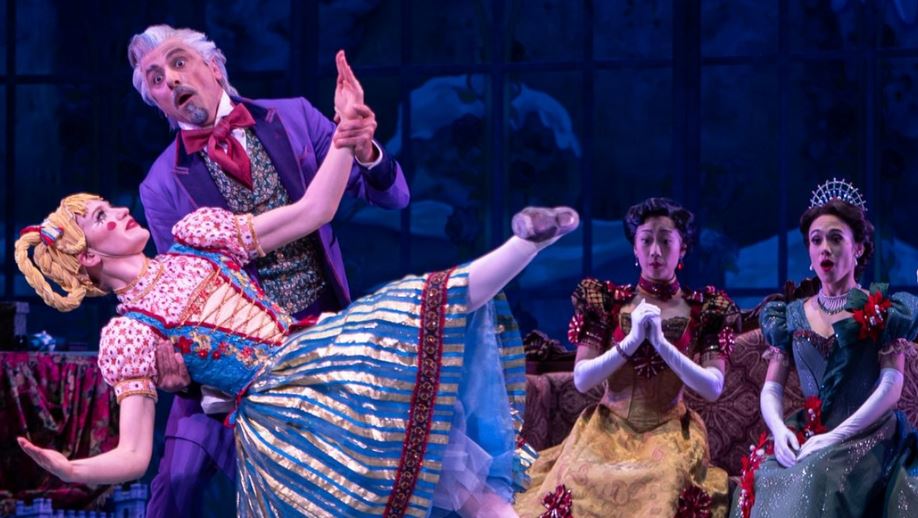
photo from The Milwaukee Ballet’s website
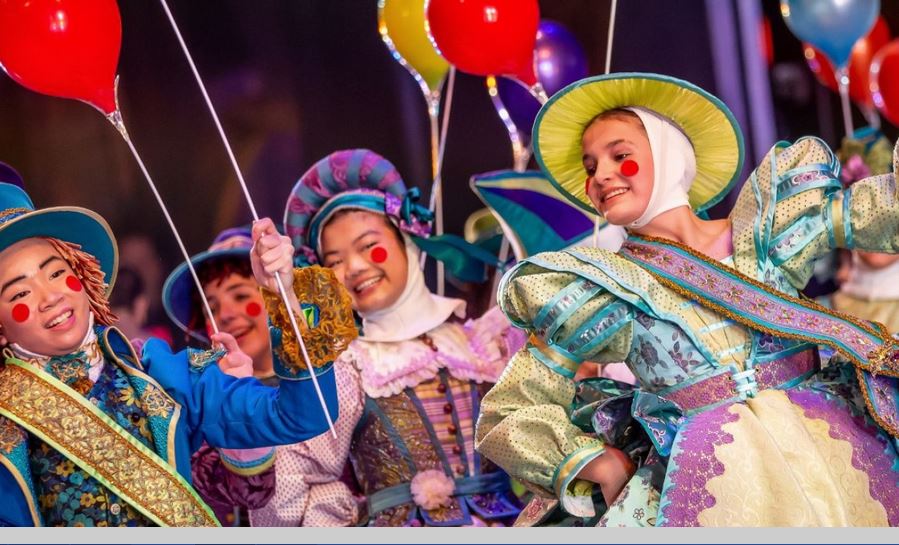
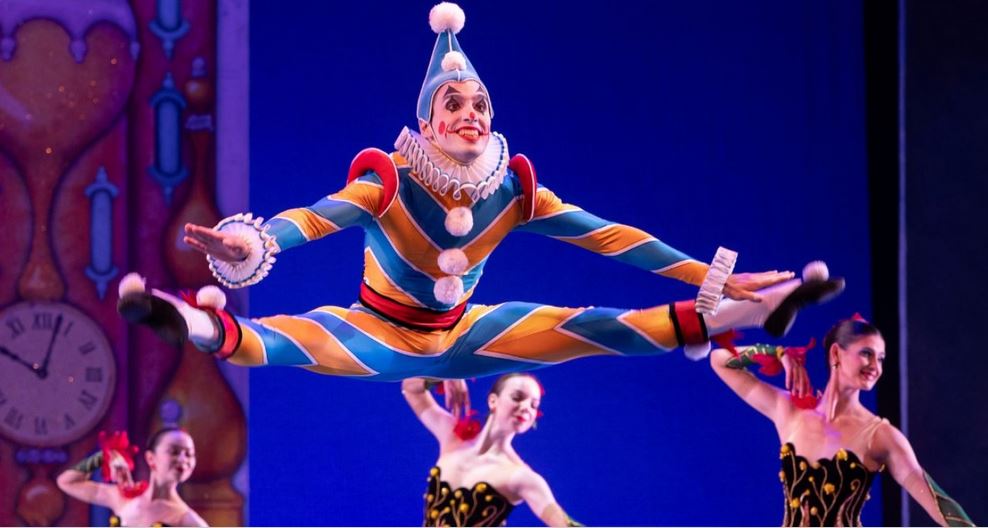
The set was simply amazing. Designs and painted surfaces were readily influenced by Art Deco, Art Noveau, and fairy tale design from everywhere. And the colors went from muted to brilliant depending on how the lighting director focused on them at each phase in a dance sequence. Plus buildings flew, trees grew great, and secret entrances and exits appeared to admit to or remove characters from the stage at will. And the costuming was gorgeous and over the top just as you’d expect from grand ballet. I was simply in awe throughout the performance. Milwaukee gets a fair share of credit across the board for the talent in their acting, dancing. performing, and directing. But I don’t think we give enough credit the lighting and set designers at any level of the arts nor to the costumers without whom the others couldn’t as effectively tell their stories. So props to Lighting Designer David Grill, Scenic Designer Todd Edward Ivins, and Costume Designer Gregory A. Poplyk.
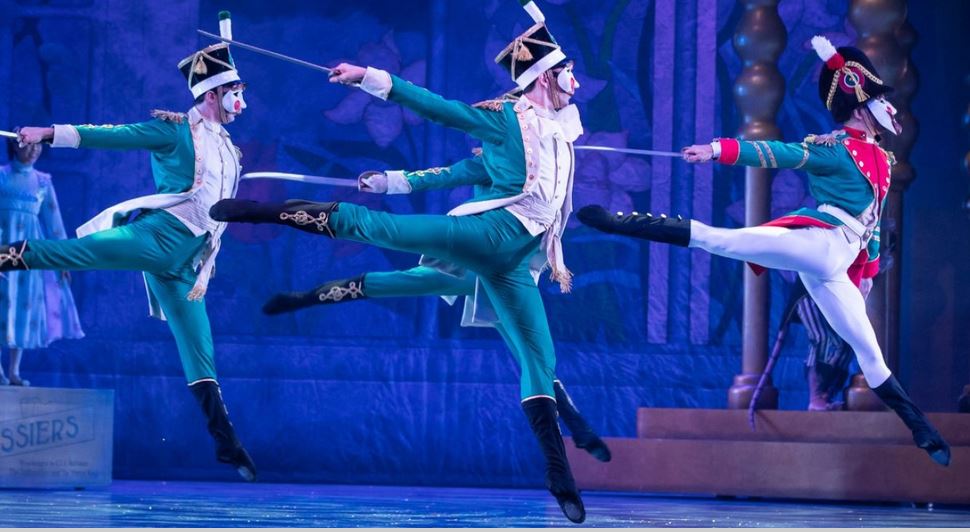
photo from The Milwaukee Ballet’s website
Of course there is no storytelling in ballet without the dancers. Pink’s ensemble is simply as artistic and coherent as any dance troupe I have ever experienced. There is grand storytelling here and this is what I felt throughout..a simple but profound sense of awe that stayed with me the rest of the evening. Most amazing of course is the dream sequence but we weren’t just watching them perform the dream dances…we were totally assumed into the dance and became the dreamers too. I had a hard time going to sleep that night when we returned to our room at the St. Kate’s Hotel.
photo from The Milwaukee Ballet’s website
The cast varied depending on the night of performance, but given the talent and skills displayed the evening we attended, I doubt that any other evening would have felt any different. But I do want to mention one dancer: Garrett Glassman who danced Drosselmeyer. He was so limber and fluid it appeared that he didn’t have a bone in his body (and I coveted his purple velvet coat).
AND: the live orchestra right down in front, was simply sublime!
I promise that I won’t repeat my great mistake here and put off seeing The Nutcracker again in the future. And I resolve to visit the Milwaukee Ballet for some of their other performances in 2026.