Stealth Public Sculpture In Milwaukee County’s Lake Park! Fini?

I have posted six different posts about the “Stealth Public Sculpture In Milwaukee County’s Lake Park!” starting in unbelievably, 2021. They have moved and morphed and engaged me constantly over that period. I have linked all of the posts below if you want to review their history as much as I have been able to gather.

In the post just prior to this, I posted that the sculptor works under the alias of McMo. We learned that from a comment eventually posted on my very first stealth sculpture post. But McMo to my knowledge has been quiet recently and I thought all of his work had been removed late last fall, even the grande dame on private property just north of Villa Terrace Museum (see post #1 for photos).

And early this year into spring Milwaukee County was particularly aggressive in removing brush and dead trees along Lincoln Memorial Drive. So I thought an era had ended.

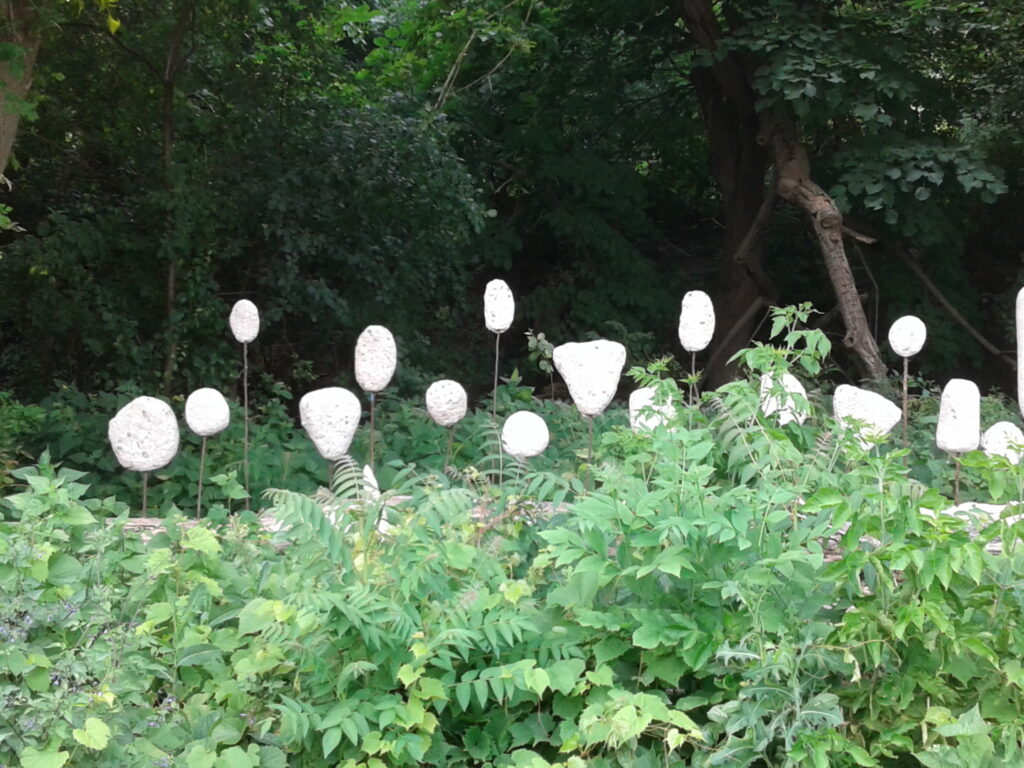
But then one day while heading home from the University of Wisconsin – Milwaukee, late in the 2025 2026 Spring semester, a small stand alone piece appeared just south Colectivo Coffee where Athena’s Necklace had stood for a number of years (see the Stealth Public Sculpture In Milwaukee County’s Lake Park! McMo link below for a photo). I was very happy to see a work appear there again and I really fell in love with it. It had smaller appendages, more egg like, smaller in scale, smoother in texture, similar to his earlier work. Maybe six such eggs skewered on rods again and supported by a round or oval concrete base sitting on the bare ground. I expected it to last a while in situ, so I didn’t rush to get a photo…sadly.
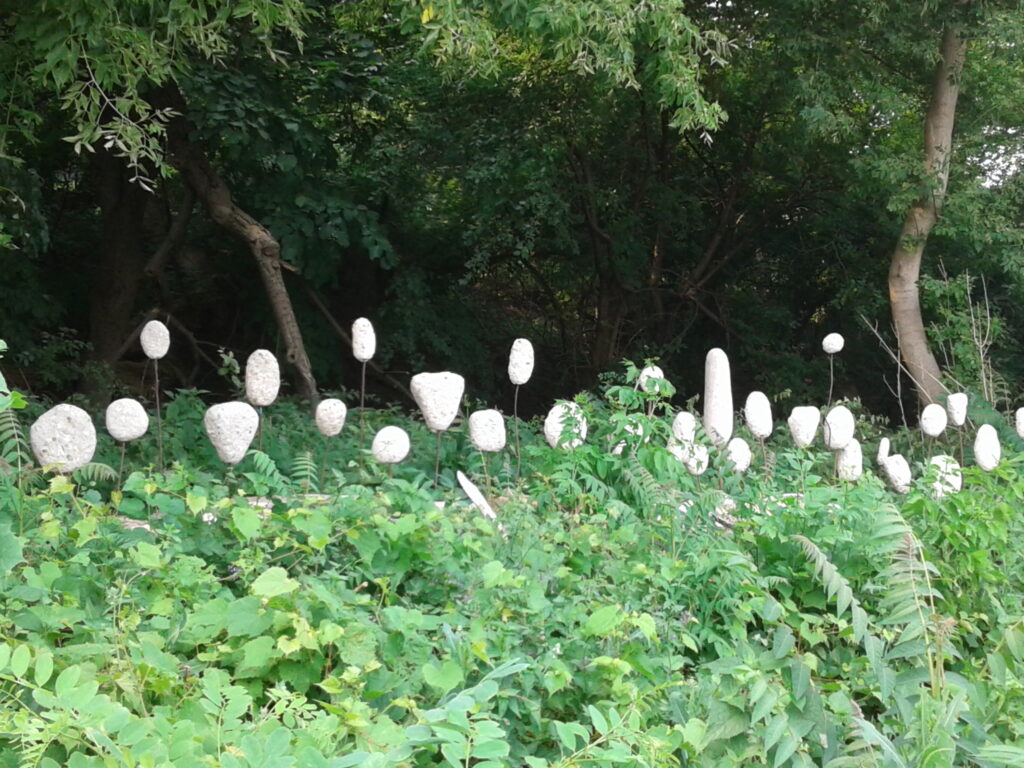
© 2026 Ed Heinzelman

But it was replaced by a large, long, bright, very energetic piece that plays back to McMo’s strength. Formed washed concrete or stone against rusting steel rods embedded and embracing a dead and collapsed tree trunk and waving in the air for all of us to admire. A perfect amalgam of man-made collapsing structure wedded with the end of life phase of the natural environment.
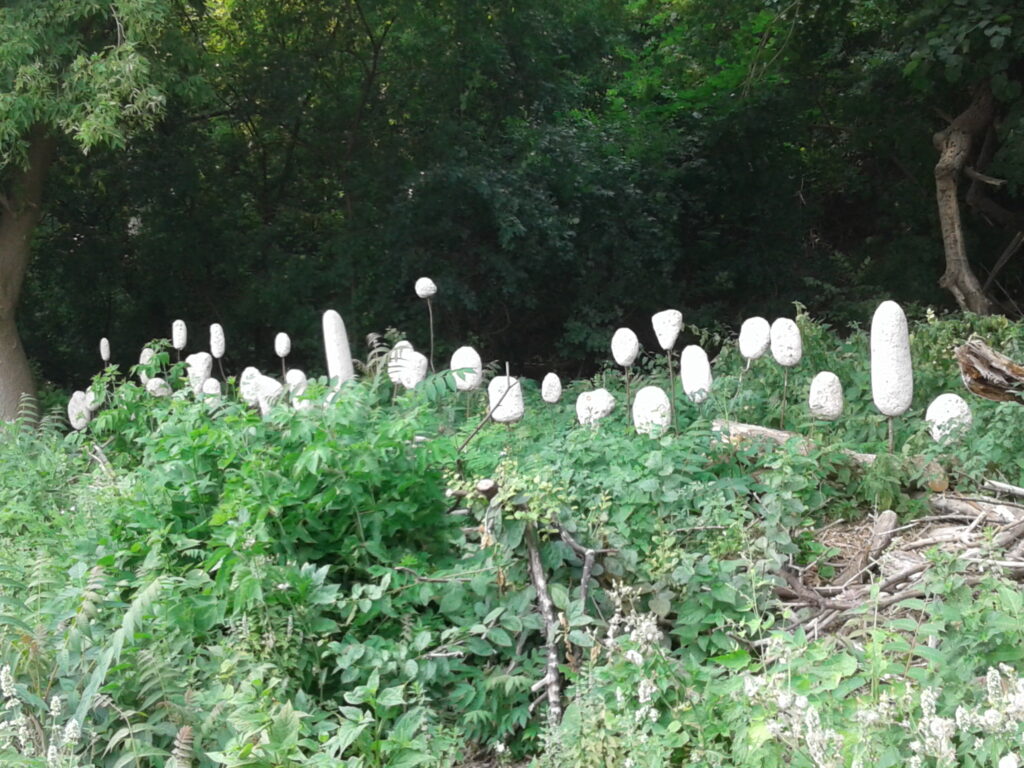
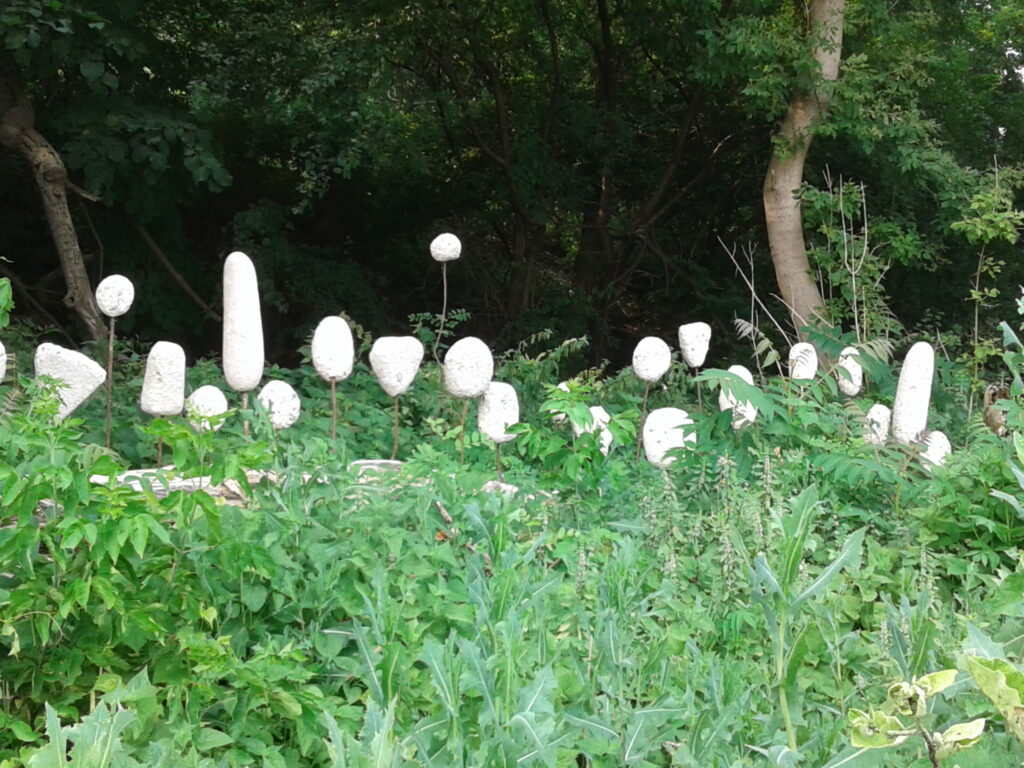
© 2026 Ed Heinzelman

I am suspecting that this play has run…so I have included Fini? in the title. But it has been a marvelous experience viewing and documenting these works.

If you go to visit this incredibly beautiful work of art, please please please, be respectful of the work and the environment.

I think I know of one other piece but it is at a private residence. So I just smile and nod whenever I pass that way.

And the other links are here:

Stealth Public Sculpture In Milwaukee County’s Lake Park!

Stealth Public Sculpture In Milwaukee County’s Lake Park! Part 2

Stealth Public Sculpture In Milwaukee County’s Lake Park! Part 3: It’s Alive!

Stealth Public Sculpture In Milwaukee County’s Lake Park! Part 4: New Sculpture and Some Disappearing Acts

Stealth Public Sculpture In Milwaukee County’s Lake Park! Part 5: One New Sculpture and Two Disappearing Acts

Stealth Public Sculpture In Milwaukee County’s Lake Park! And The Sculptor Is? McMo

The Wood Engravers’ Network’s Fifth Triennial exhibition at the University of Wisconsin – Milwaukee

Everyone who has spent any time enjoying the visual arts is familiar with woodcuts. They are often very warm and tactile and inviting prints traditionally printed in black ink but often done in color in the last hundred years or so. Woodcuts are made by carving away the parts of a wood block that the artist wants to show as white, the negative spaces in the image. And the carving is done with any number of different knives or gouges or chisels in the plank grain or long grain of the wood…the softer side. And then the ink is applied to the remaining raised surface, a sheet of paper is laid over the block, and the entire thing is run through a press to transfer the ink from block to paper.

But now the Emil H. Mathis gallery at UWM is featuring the Wood Engravers’ Network’s Fifth Triennial exhibition. So this is a real opportunity to delve into wood engravings which are similar but they are not the same as a woodcut. A wood engraving is carved in the end grain of a piece of wood, the cross cut side for those carpenters out there. And then that piece is finished to a very fine surface and tinted before the drawing is transferred to the block or in some cases actually drawn on the block. The tools used in engraving are far smaller, far sharper, and very fine compared to those used in woodcuts. That is required because of the harder surface in the end grain wood. But the advantage of these fine tools and the harder wood surface is a medium that exhibits far more detail and far more possibilities for tints, shading, and other subtleties. Once completed the block is printed a similar fashion to a woodcut but the prints will generally be smaller because the end grain pieces of wood are smaller to start with.

The Wood Engravers’ Network’s Fifth Triennial exhibition was juried by Max Yela, the Head of Special Collections at the Golda Meir Library at UWM. He has selected a marvelous collection of 60 engravers from an international array of artists. So subject matter and technique and genre run the gamut of the possibilities of wood engraving. Now let’s step into the 21st Century a bit and realize that the woods most sought after for engraving have become more scarce and far more expensive. So there are now a number of synthetic surfaces in use including corian for example, a product similar to corian counter tops. So you will see a few prints using these new materials as well.

So if you are not familiar with wood engravings or not quite sure how they differ from woodcuts, this is the perfect opportunity to explore the medium. And as an extra bonus Yela has also included a few books and engravings from UWM’s Special Collections as a counterpoint. This is a rare chance to see some of these items as well.

The show is free and open to the public but the gallery has limited hours: 10:30 AM to 2:30 PM, Monday through Thursday. The show continues through May 1, 2025. The Emil H Mathis gallery is located on the ground floor of Mitchell Hall, room 170, at 3203 N Downer Avenue, the north west corner of Downer Ave. and Kenwood Ave.

And now a few of my favorites…and an attempt to lure you into the gallery. I apologize for some of the funny angles, I was trying my best to reduce glare (and the reflection of my red overcoat):

Rebecca Gilbert, The Widow (self portrait), wood engraving and letterpress, image 2.5 x 3 inches
Christoper Register, Gingrich from the Scoundrel’s Series, Resingrave, 5 x 5 inches
Abigail Rorer, The Madonna Tree, relief engraving, 6 5/8 x 5 inches
James Todd, Masters of War, wood engraving, 12 x 16 inches
Blaze Cyan, A Complicated Life, wood engraving, 5.9 x 3.9 inches

And here’s two from the UWM Special Collections:

Lewis Carroll’s Alice’s Adventures in Wonderland, wood engravings by artist Barry Moser
The Works of Geoffrey Chaucer, a facsimile of William Morris’ 1896 Kelmscott Press printing.

modern IMPACTS Celebrating 50 Years Of The Rosenberg Collection At UWM!

The Emile Mathis Gallery at the University of Wisconsin-Milwaukee opens the 2024/2025 season with a celebration of a generous gift of 20th Century Art from Henry and Blanche Rosenberg. The show is curated by gallery director Leigh M. W. Mahlik and encompasses the entire span of the Rosenberg’s collection. Primarily anchored in prints or other works on paper, Mahlik has also included a number of paintings and small table top scaled sculptures.

Visiting this show is incredibly rewarding. Most of the major European artists of the period are represented. And the work is certainly museum quality but the scale is a more personal size and invites you to spend some time getting familiar with it. Something that isn’t always available when viewing work of epic proportion. When I visited a second time, part of my intent was to take photos of work that spoke to me that I wanted to post with the article and hoped that they would speak to you. Unfortunately I got carried away and will have to make choices now so that I don’t overwhelm you with visuals. After all, I do want you to visit the gallery.

But the Rosenberg’s clearly had an eye for design. Although these works aren’t necessarily well known they are clean and crisp in design, and exhibit the exquisite draftsmanship that these artists are known for. And color is also a focus of many of these works. But there are some abstract pieces here that stand out too. This is a captivating show. And the best part it is easily accessible and free to the public.

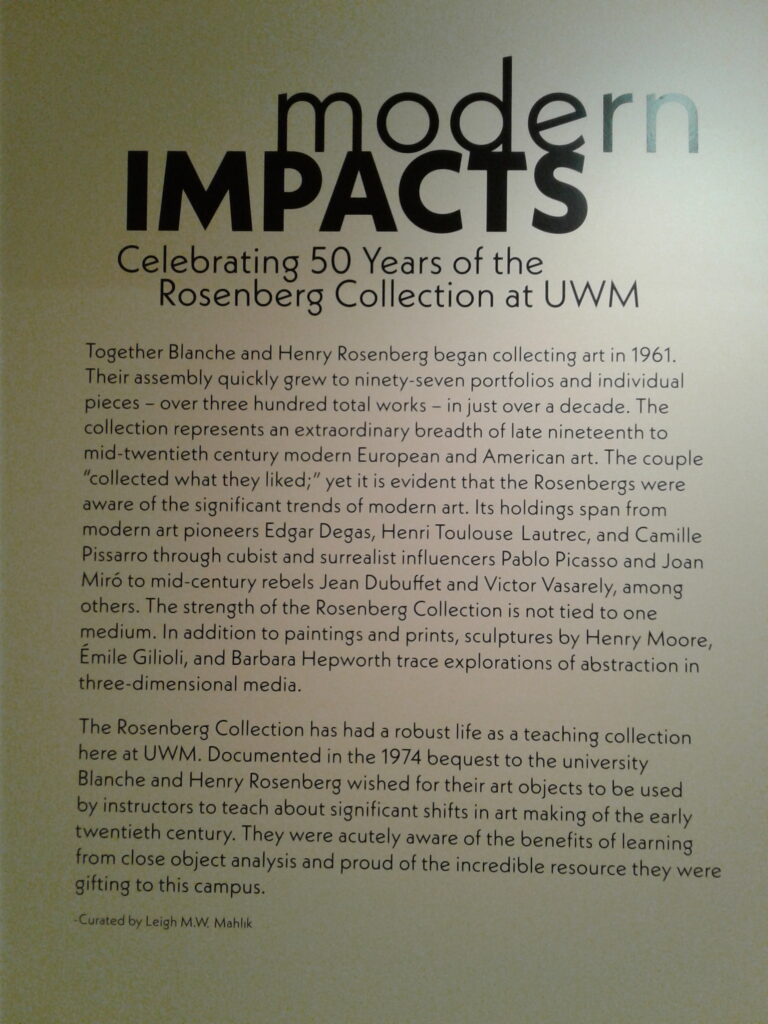
My initial intention here was to quote a bit from Leigh Mahlik’s wall text about the show. But rather than try to edit it and retype it, I am just going to post a photo of the introductory text here. As it mentions, the collection has been instrumental in the educational mission of UWM and the Art History Department (which I understand is celebrating its 60th Anniversary this year). And with that in mind, Mahlik has also included short histories on the various ‘isms’ exhibited here…the show and the collection is certainly a delight!

User comments

I urge you to take the time to visit the Emile Mathis Gallery and enjoy this marvelous show. The Mathis Gallery is on the ground floor of Mitchell Hall which is on the corner of Downer Avenue and Kenwood Boulevard. The gallery is in the southwest corner of Mitchell but there is clear signage on the first floor at the entrances pointing you in the right direction. The Gallery is open Monday through Thursday from 10 AM to 4 PM and admission is free.

Modern Impacts: Celebrating 50 Years of the Rosenberg Collection at UWM continues through November 14th, 2024.

So there, I have given you plenty of links for more information. I will include one more here that is my take on the gallery as a whole: A Place For A Muse: The Emile H. Mathis Art Gallery @ UW – Milwaukee.

And now, I will include a few photos of the work that I loved from the show. I hope you enjoy them and then make plans for your visit!!

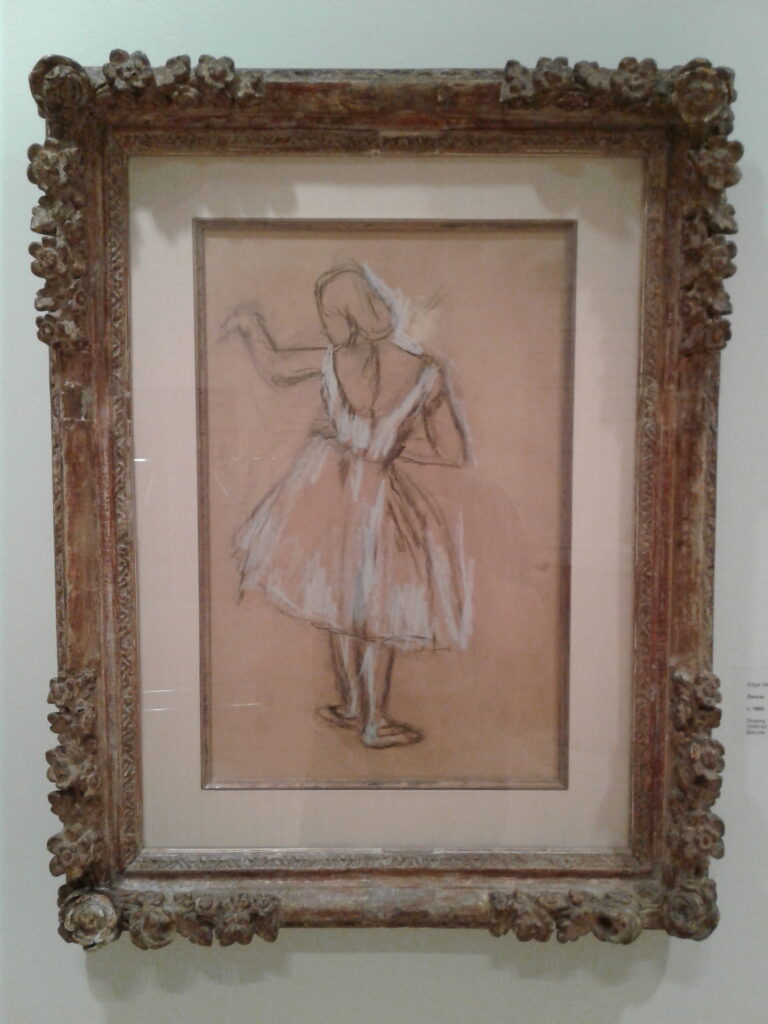
Edgar Degas, Dancer, drawing, c. 1880
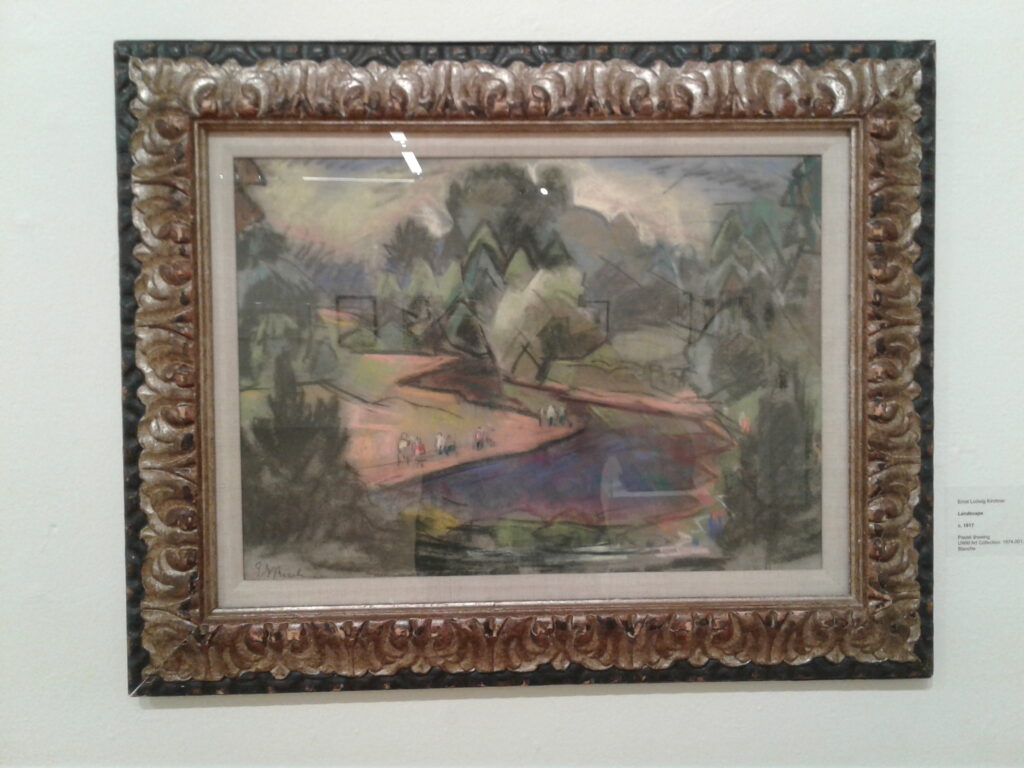
Ernst Ludwig Kirchner, Landscape, pastel drawing, c 1917
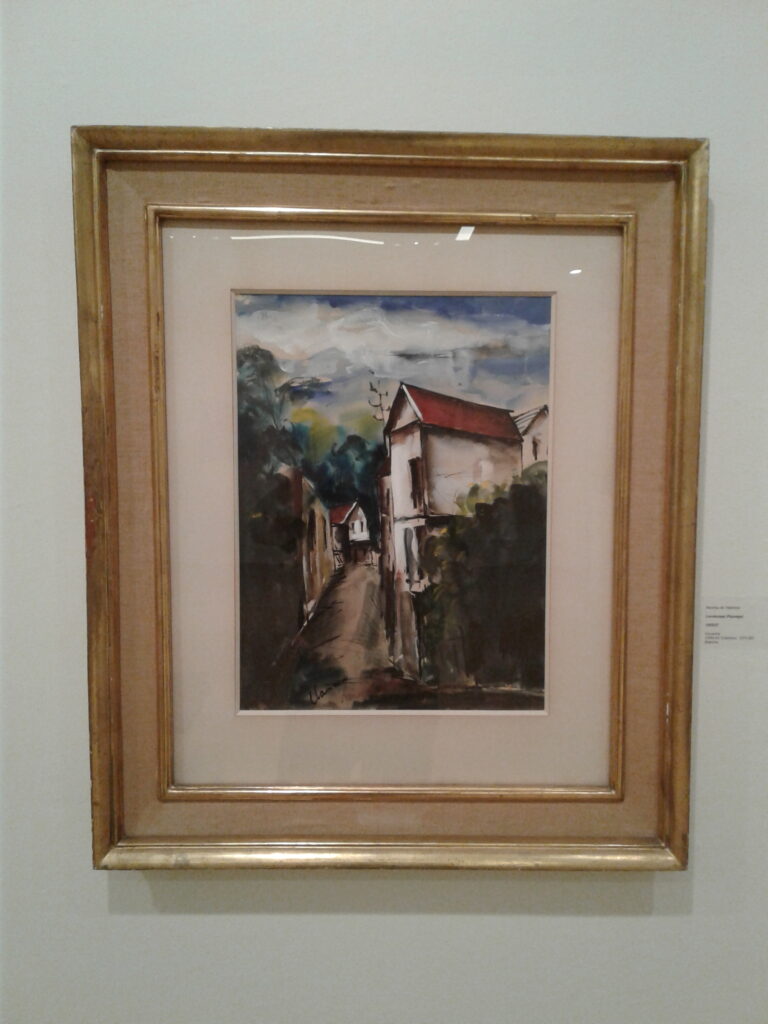
Maurice de Vlaminck, landscape, gouache, 1925/27

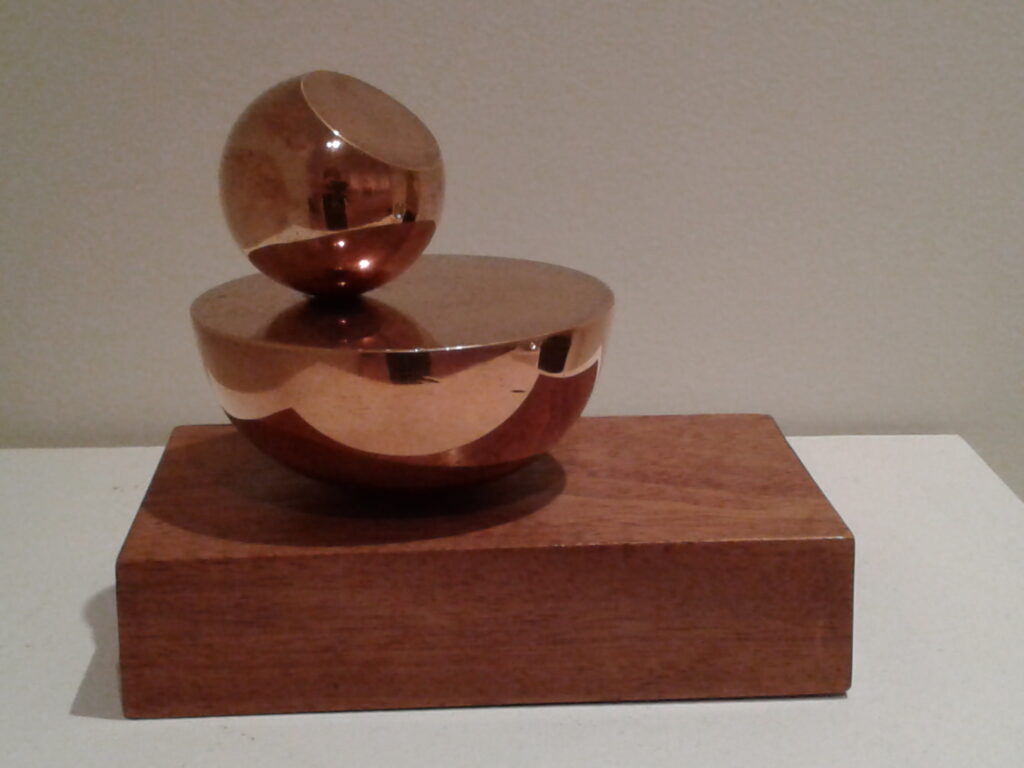
Barbara Hepworth, Sphere and Hemisphere, bronze, 1962

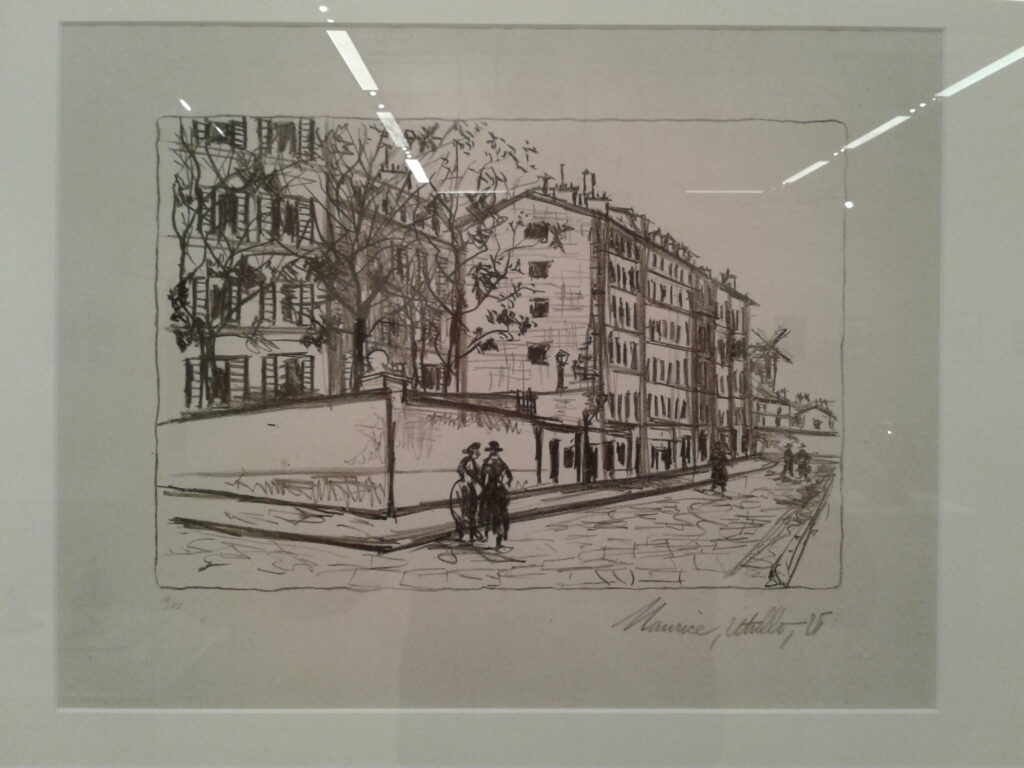
Maurice Utrillo, Orchampt Street, lithograph, 1925

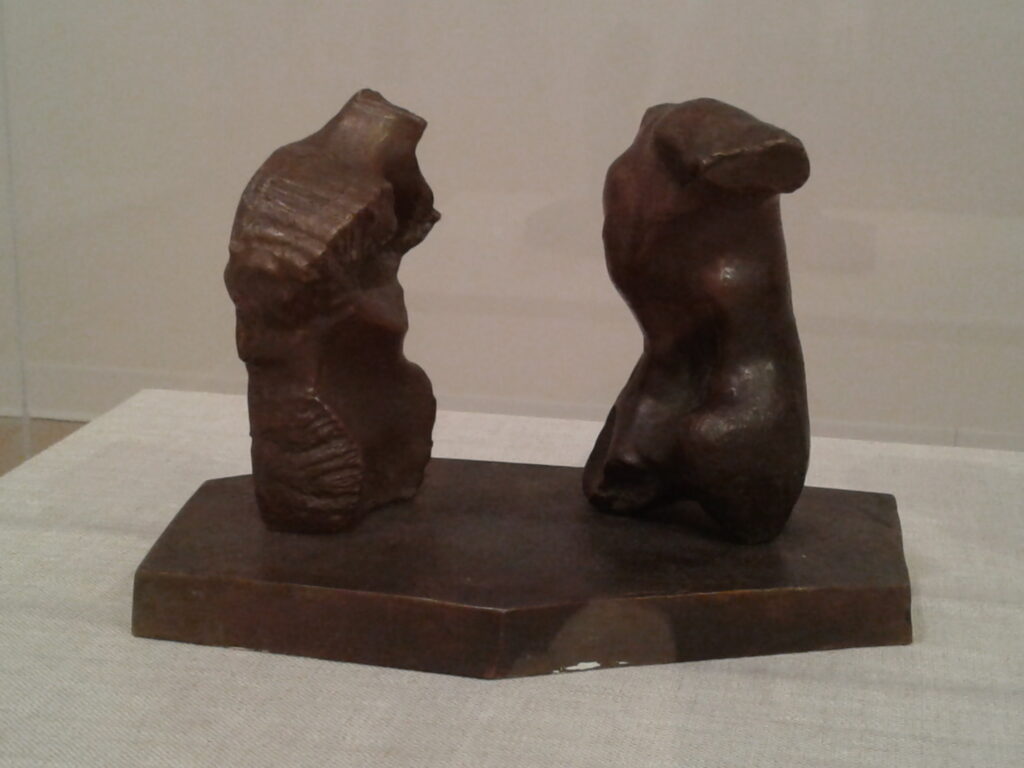
Henry Moore, Two Torsos, bronze, 1962

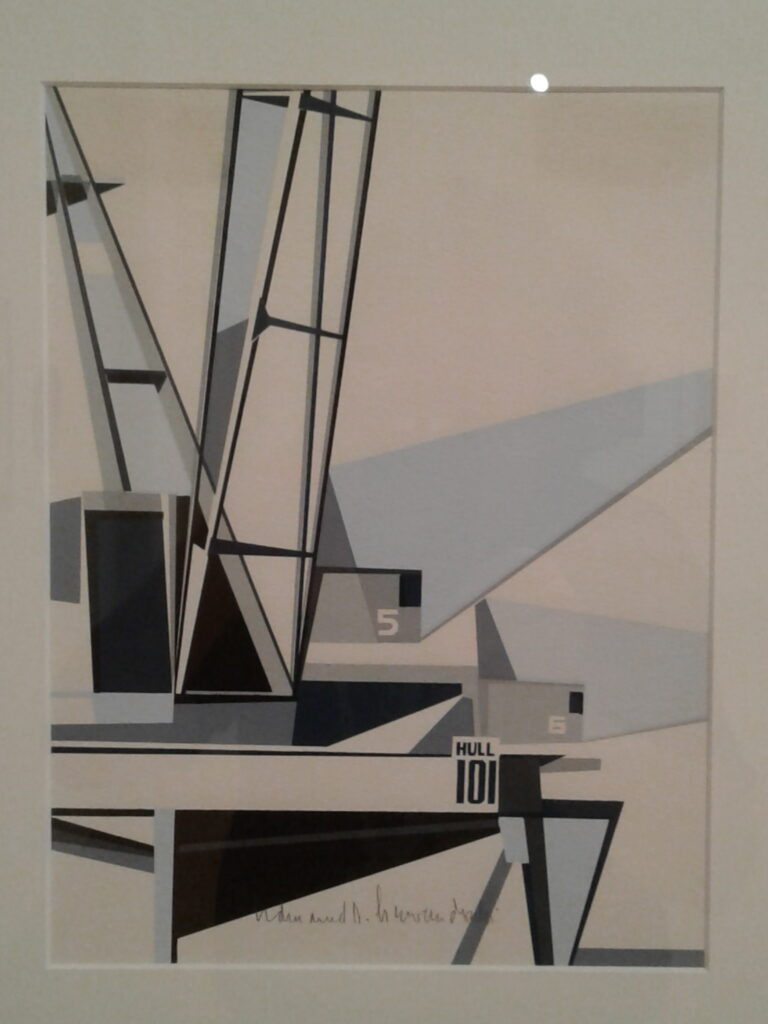
Edmund Lewandowski, untitled, lithograph, no date

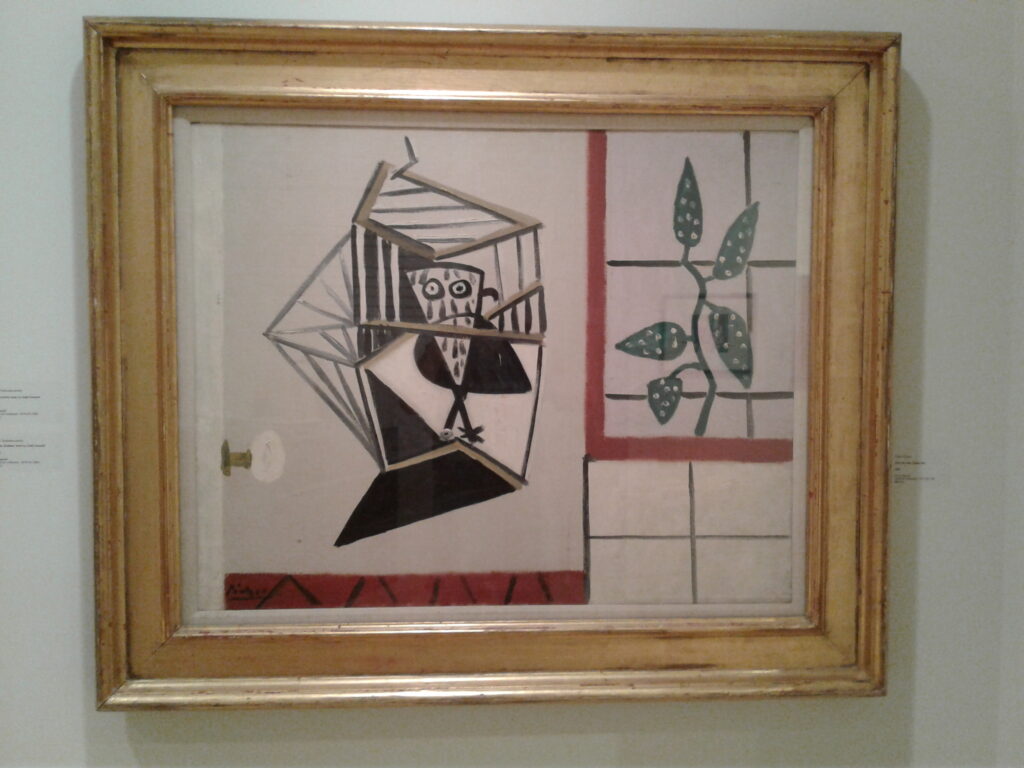
And yes, there are Picassos! Several of them but this one is particularly fun:

Pablo Picasso, Still Life With Caged Owl, oil on canvas, 1947