In A Black Box Theater At The Lake Country Playhouse, The Da Vinci Code Will Be Revealed To All Who Dare!

I don’t have to worry about spoiler alerts here…the story is very well known. If you read Dan Brown’s original book and/or saw the original film adaptation, you need to see the Lake Country Players production of The Da Vinci Code. If you are not aware of the story but love good stories told well, you need to see this production of The Da Vinci Code.
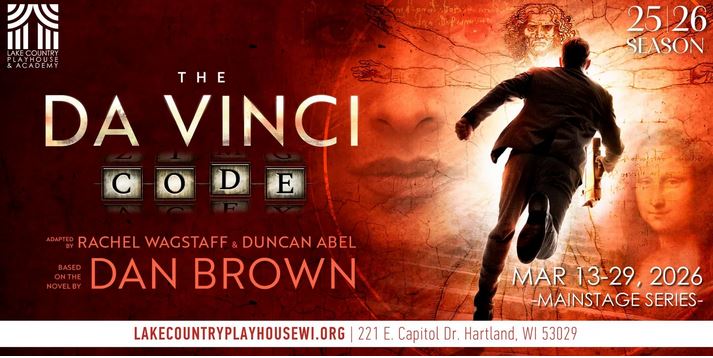
In the past, I have described the Lake Country Playhouse as a little jewel box theater. And it is. It is intimate and the audience is never more than a few feet from the action. And the sets are always creative units that propel the story and allow the actors comfortable environments to work in. But this time, director James Baker has the unenviable task of depicting events across Europe in a number of ‘exotic’ locations. So for The Da Vinci Code, he and his design staff have elected to work from a black box theater. And they nailed it! Yes, they are still working with minimal furnishings, which get moved about as required, but they have selected a number of grand slides to project against the back wall that depict our various locations and easily put the audience into the sense and mood of the scene.

The play was adapted from Brown’s novel by Rachel Wagstaff and Duncan Abel and treks across Europe from any number of rooms in the Louvre to Versailles to England to any number of churches and abbeys. Baker with Breanne Brennan (Lighting and Sound and Projections), Jennifer Craven (Stage Manager), and Nancy Hurd (Props and Costumes), make the transitions clear, clean, and with your suspension of disbelief running hot, believable.
I am not sure exactly where to start, so let’s start at the beginning. Harvard Symbology nerd, Robert Langdon, is in Paris to present a lecture. He is invited to meet at the Louvre with a curator who is a similar nerd but the meeting gets canceled. Langdon goes anyway only to find that the curator, a certain Jacques Sauniere, has been killed in the galleries and of course the Paris police, now have a special interest in Langdon. Sauniere has left behind a number of cryptic clues that the police hope Langdon can help with but his name is also included with the messages left by the deceased. The police cryptographer arrives to help with decoding the messages and realizes that although Langdon is considered a suspect, he is also her best possible ally in solving the case. It just so happens that the cryptographer is Sophie Neveu, the granddaughter of Mr. Sauniere, so this is more than a who done it, but a personal matter now. So she helps Langdon slip out of the Louvre and they are off on a series of adventures across Europe to solve the case and solve an ages old mystery.

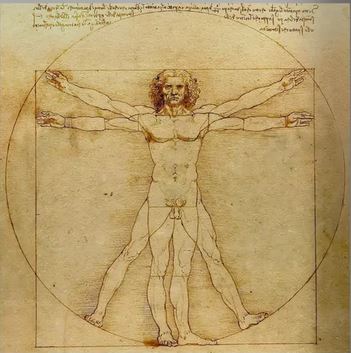
Carl J. Petersen makes his first major appearance as the late Jacques Sauniere, tied to a Louvre gallery wall in an imitation of Leonardo’s Vitruvian Man. Hardly an auspicious first act entrance but Petersen returns throughout as the loving and thoughtful spirit of Sauniere, carefully filling in the back story and providing some insight into the goings on even though Sophie and Robert aren’t aware of his presence. Our Robert Langdon is played by Chris Gonyo, who certainly knows how and when to play against the Indiana Jones type that his character may suggest. Gonyo at times is timid, squeamish, hesitant, and ready to bail, but can’t quite let go of the mystery at hand. He finally becomes a Hitchcock type hero, the common man who seizes the moment and excels in the challenge.

Langdon’s co-conspirator is Sophie Neveu, and somehow Amanda Springob portrays Neveu with eternal energy and curiosity. An energy and curiosity that is most certainly the main inspiration for Langdon to continue. Springob’s portrayal of Neveu is the life force in this Da Vinci Code. And the initial nemesis? That wold be Jack Anderson’s Silas. Silas is a member of Opus Dei, a cult or a group of true believers depending on your vantage point. But Anderson’s Silas is smarmy, and I don’t mean in an unctuous oily way, but in a very tangible creepy eerie sense. One that just does not go away. No human should act like this. No human should move like this. No human should be so focused as to ignore the facts of everyone around him. But Anderson is that focused and that lacking in empathy that he is the perfect villain here.

Langdon has a colleague who lives near Versailles. An eccentric British expert on the Holy Grail and all roads seem to be pointing to the Grail by now. Paul Weir is Sir Leigh Teabing and is clearly that eccentric British academic that we would expect. He warmly welcomes Langdon and Neveu but rambles on and on about his interests while they are trying to pick his brain on their own intense mystery. Of course Weir’s Teabing thinks he’s the smartest person in the room. Weir rambles from intense to tangential and back, but suddenly springs into action and off to England they go in his private plane. Now Teabing has a maidservant, Remy. Remy is played by Mike Crowley. And in his all black costume, permanent scowl, and guttural replies, Crowley drips sinister every time he steps on stage. Your spidey senses will be tingling immediately and the reason for your discomfort will soon be revealed.

Two other notables are our determined Paris police detectives, Bezu Fache and Collet. Jeffrey Seelig is a sly Fache, seemingly a bit confused by the events in the Louvre and later, he actually is aware of what is going on and trying to track the players as he hopes they solve the crime. And Sydney Faris as Collet, is a dedicated officer but maybe not as astute as Fache. Although that too may be a ruse.

The Lake Country Players present The Da Vinci Code from now through March 29, 2026 at their Lake Country Playhouse in downtown Hartland. Additional information and tickets can be found HERE

The play runs 130 minutes plus a 15 intermission.

This show has a number of instances of simulated gunfire resulting in death, a number of fight scenes, and a scene of self-harm.

Et Tu, First Stage? The Young Company Presents Julius Caesar!

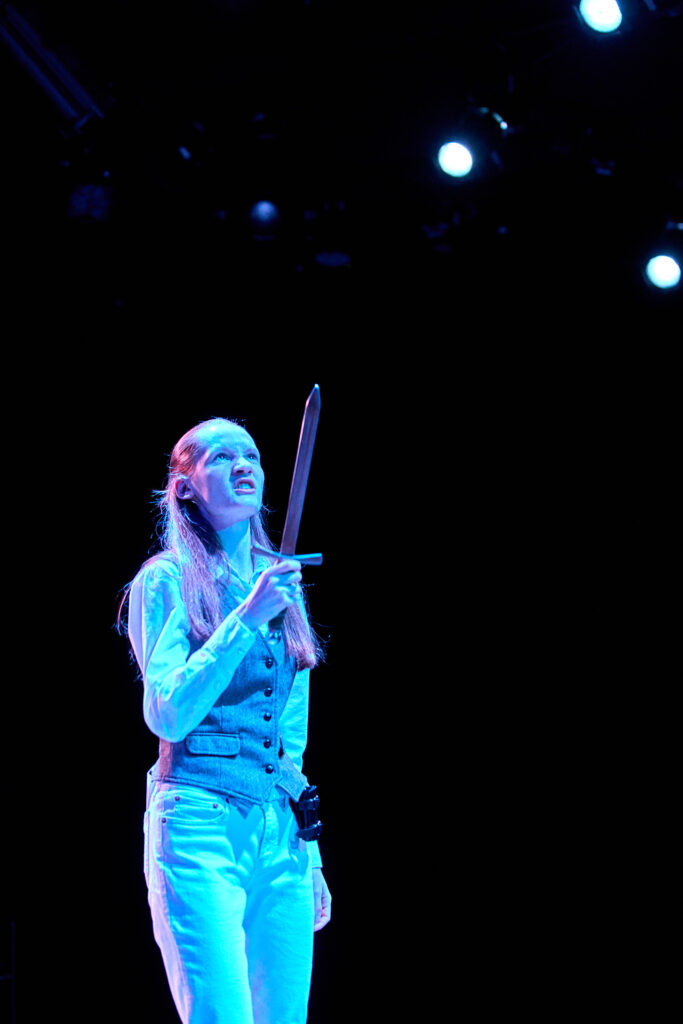
There I was, on the eve of the Ides of March, sitting in the intimate main stage theater of the Milwaukee Youth Arts Center, as one of William Shakespeare’s most acclaimed tragedies begins to unfold before me and I see and hear Caesar being warned…Beware the Ides of March!!!

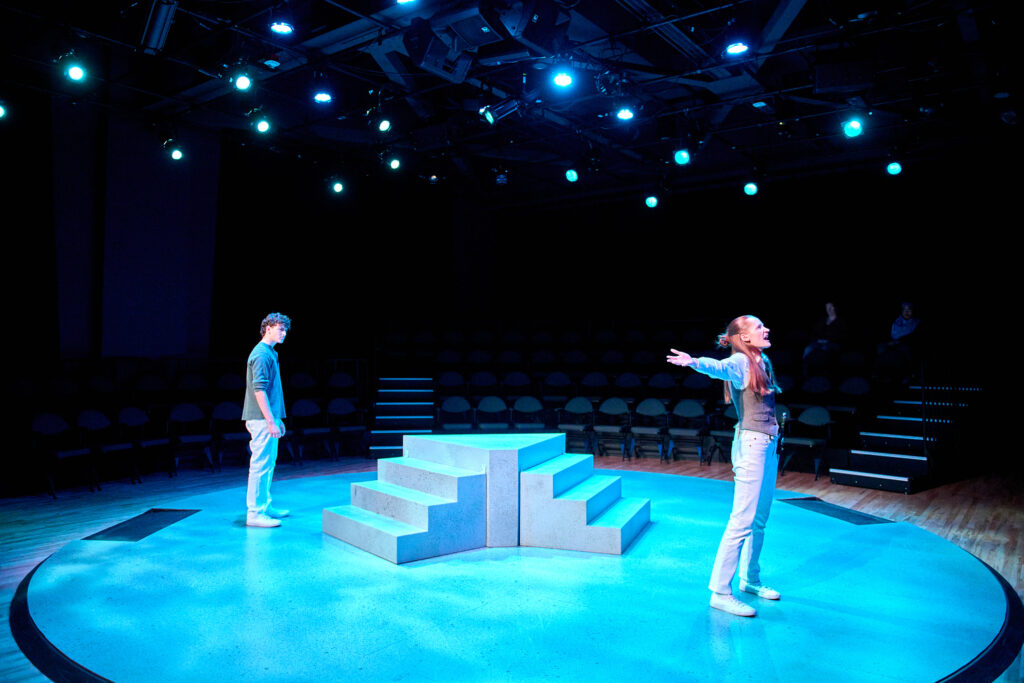
My regular readers will know this but I like to remind everyone that the First Stage Young Company is made up of high school age theater students who perform adult plays generally without any adults in the cast. And they perform on the main stage in the Milwaukee Youth Arts Center. This stage is a theater in the round with no more than four rows on either side, so every audience member is close to the action. And they use very minimal stage furnishings and plain and simple costuming so that they can let their actions and the text tell us some very compelling stories. But don’t think for a moment that this is anything but engaging and demanding theater. The Young Company has become my favorite theater group.

(L to R) Ben Nowacek and Abbie Cashman in Young Company’s Julius Caesar. First Stage, 2026. Photo by Paul Ruffolo.

Unlike the bigger musical productions at the Marcus Performing Arts Center, the Young Company does not have two alternating casts, so you will see the actors that I mention here.

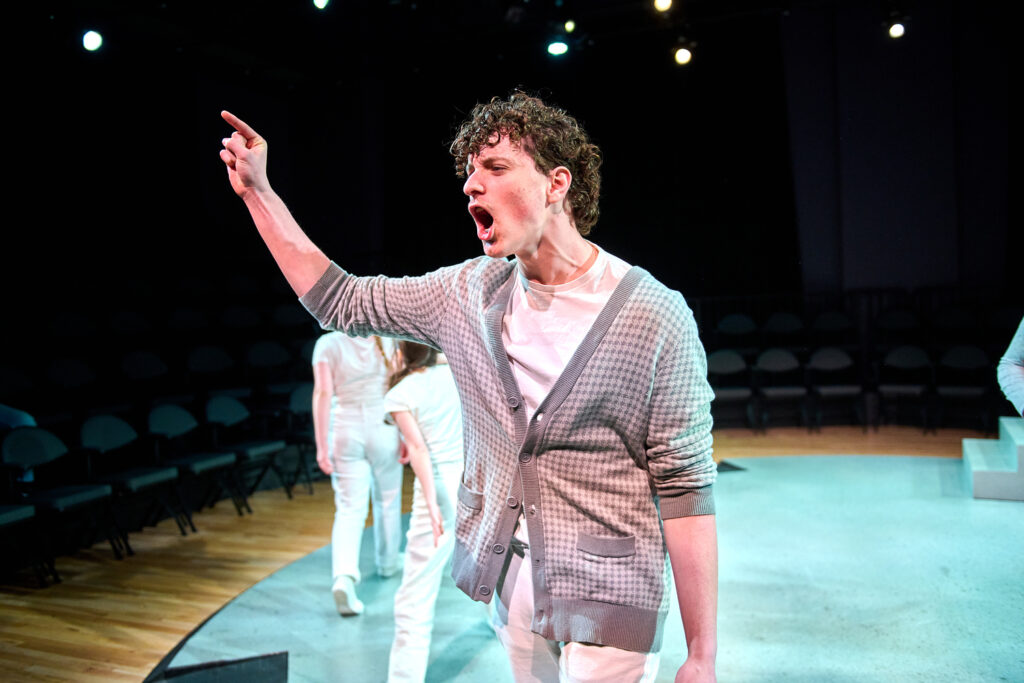
Edward Owczarski plays an ideal Caesar. Owczarski is regal without seeming imperious but shows that his Caesar can easily be swayed by flattery and is he too ambitious? He treads that fine line that would suggest you could see that either way. Ben Nowacek is a very true and loyal son of Rome in his depiction of Brutus. Showing a bit of doubt for a moment, once he makes up his mind he is all in! I’d say Nowacek’s Brutus is more ‘imperial’ than Owczarski’s Caesar. But where does Nowacek falter fatally? In his funerary speech just before Marc Antony. And then there is Marc Antony, portrayed by Paxton Haley. Haley never waivers, never falters, and is the epitome of the faithful and determined Antony. Haley understands Antony and her version of Friends, Romans, Countrymen, rings out just as you would expect and will sway you to her cause.

(L to R) Cai Weiss and Natalie Ottman in Young Company’s Julius Caesar. First Stage, 2026. Photo by Paul Ruffolo.

But the one actor that dominated every scene she appeared in was Natalie Ottman as Cassius. Ottman is wired, on edge, determined, and strident all at once and her energy as she strode back and forth across the stage just drew the focus to her Cassius even when Brutus or Marc Antony was present.

Natalie Ottman in Young Company’s Julius Caesar. First Stage, 2026. Photo by Paul Ruffolo.

One always interesting event is part of every First Stage performance. There is a brief talk back where audience members can ask questions of the cast about the performance or the play or the preparations. This time a question asked about the director Ken Miller and how he prepared the Young Company for this very adult and tragic play. And the answer is, during the early table read throughs he encouraged the actors to read their characters in the manner they interpreted for the mood and emotions of their character. And from there he and they refined the action and characters collaboratively. So these young actors are learning more than just how to act…

(L to R) Silver Anderson and Paxton Haley in Young Company’s Julius Caesar. First Stage, 2026. Photo by Paul Ruffolo.

The Young Company recommends Julius Caesar for families with young people ages 14-18 and Shakespeare fans of all ages!

However every young person is different and may or may not be ready for certain elements of each production. The play Julius Caesar contains descriptions and depictions of violence and self-harm.

I haven’t seen nor read Julius Caesar in quite some time. It is amazing how of the time many of the story lines here feel…sadly contemporary.

The play runs about two hours including a 15 minute intermission.

Julius Caesar is playing at the Milwaukee Youth Arts Center from now through March 22nd, 2026. Additional information including full cast listings and tickets can be found HERE!

Extra Credit Reading: The Enrichment Guide

Cai Weiss as Casca in Young Company’s Julius Caesar. First Stage, 2026. Photo by Paul Ruffolo.

UWM’s Department of Theatre Presents The Good Doctor: Anton Chekhov Vs. Neil Simon

“Charming and Clever” : Anton Chekhov

So what have we here? Before he became a famous playwright, Anton Chekhov wrote a great many short stories and studied to become a doctor. And Neil Simon has taken a number of these short stories and adapted them to the stage. I imagine this new play is named The Good Doctor because Chekhov did in fact become a doctor and practiced medicine while he wrote his great plays.

And it makes a certain amount of sense that Simon would turn Chekhov into comedies because Chekhov himself fought with very serious directors to have them put more emphasis on the comedy in his writing…not often successfully. So who does win here in a Chekhov vs. Simon face off? Well it depends on which end of the absurd spectrum you enjoy more. I mean that sincerely. Certainly these stories are very much Chekhov and beyond the unpronounceable Russian names they focus on every day life, obsessions with trifles, dramatic but boring interludes, and surprisingly discouraging ends for the characters. Simon, it seems, stays true to those events, but certainly pulls out a modern comedic sensibility running almost to the silly at times and adds a fair amount of slapstick to the goings on. But too, Simon has added an alternate ending at times.

Stage set of The Good Doctor at UWM. Photo by Ed Heinzelman

This is not an episodic play but a number of vignettes from the Chekhov stories only tied together by the writer, who looks remarkably like a young Anton Chekhov and played distinctively by Owen Foulds. We first meet the writer at his desk working and Foulds gives us a lively version of the writer providing a spontaneous tour of his home. We are also introduced to a motif that recurs throughout the play as the writer is accompanied by the ensemble representing a group of his characters. They play a bit like a Greek chorus enhancing the mood and pace of the scene while Folds addresses the audience. Foulds also easily transitions to a writer hard at work to later one with a serious case of writers block to finally a very busy and forward writer auditioning an actress for his new play. Foulds presence on stage in The Good Doctor is certainly a very dynamic focal point and keeps the whole endeavor on story.

Yes, Chekhov is often high drama and tragedy but yes, he did open the door to farce and Simon walked right in without announcing himself. Some highlights: ‘The Sneeze’ where a bureaucrat becomes a desperate obsessed individual after sneezing on his superior…from the program notes I am guessing this over the top performance was from Maverick Johnstone (if my attribution is incorrect, please let me know). But his attempts to apologize and apologize and apologize become the death of him. And it is Maverick Johnstone again in ‘The Seduction’ as a confident confidence man whose pleasure is found in the seduction of married women. Johnstone conducts a Ted Talk during this act and implores the men in attendance to take notes. It all goes swell until the shoe is on the other foot. And ‘The Surgery’ where Hector Esteban Rivera-Rodriquez plays an overly confident intern intent on removing an infected tooth belonging to a cleric played by Jozzlin Biddl. This is one of the major slapstick sessions as the intern and the cleric resist working together to remove the tooth and ease the pain. Both actors know good physical comedy. And one last one that I need to mention and it too involves some slapstick physical comedy along with a bit of psychological warfare if you will. Johannah Wiggins as a very desperate woman, despite having no claim against a bank, simply browbeats the bankers played by Maxwell Dane Coffrin and Brillan Gugel into giving her what she wants. Wiggins simply lurches from one silly demand to absurd another ignoring any facts or sense of decorum…Wiggins is a force of nature here.

And one last episode needs to be addressed…but it isn’t a farcical bit and may not even have Chekhovian roots. ‘Too Late for Happiness’ is a bit of a respite for the audience to take a breather…it is a musical piece with two characters, a older man played by Brillan Gugel and an older woman played by Mariah Kiefer. They apparently have often seen each other in a park but remained strangers until Gugel’s character approaches and suggests they share some tea. Both actors easily express doubt tinged with longing and sing an amazingly romantic and touching song.

One last actor needs to be mentioned. Appearing center stage in almost every scene or at least observing the actions off to the side, the desk plays itself.

This is a production of the Department of Theatre in the Peck School of the Arts at the University of Wisconsin-Milwaukee. Director Karen Estrada, who is a lecturer at UWM, has done an incredible job of pulling together a very disparate group of student actors and has fully staged a professional presentation from a difficult script.

Wait ! Stop ! There is an alternate ending, you may inherit two million rubles.

The Good Doctor continues from now until March 15, 2026 at UWM’s main stage theater in the Fines Arts building just north of Kenwood Blvd and East of Mitchell Hall. Tickets and more info here.

Extra credit reading: Play Bill